
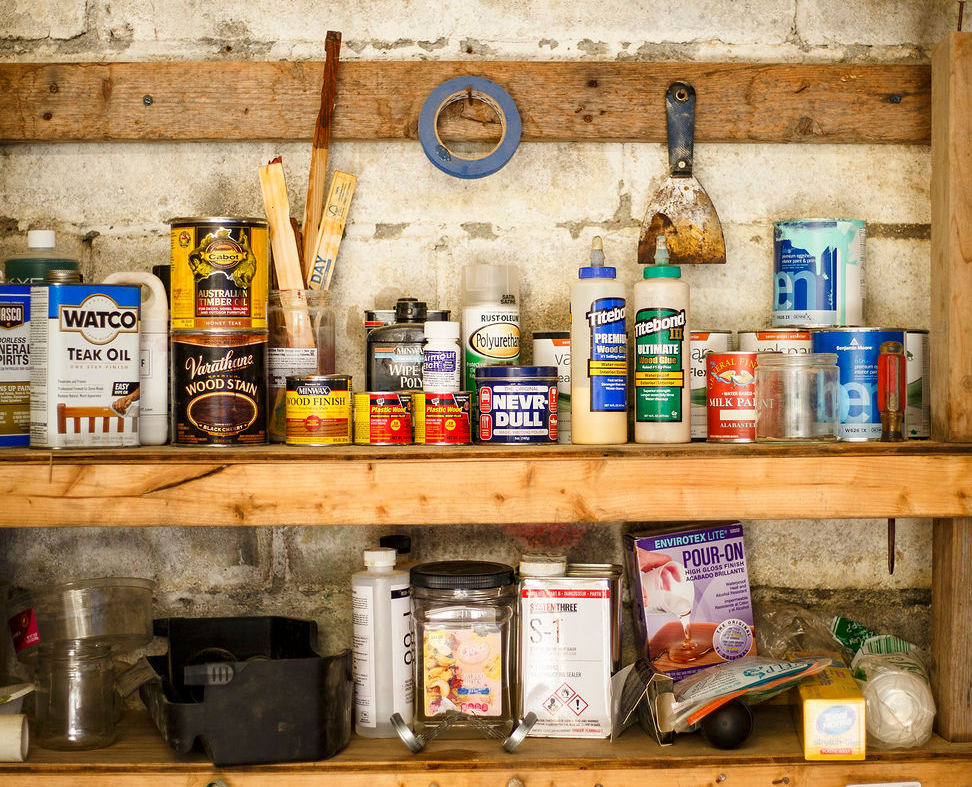
I use a range of different finishes for my furniture, crafts and custom work. Sometimes a project looks great with a natural oiled or waxed finish, while other times polyurethane, spar varnish, paint, or a thick layer of epoxy is more appropriate. The finish I use depends on the style of the piece, the way it will be used, or your own personal preferences (if it’s a custom request). Every different type of finish will require a different kind of care. I am happy to discuss these options (and more) on an individual basis.
Finishing Kitchen Products
For anything that might be used for food, I have a month-long process of sanding, oiling and waxing for a smooth, durable and food-safe finish. I begin with multiple rounds of sanding and raising the grain, then I apply a coat of tung oil and citrus. Unlike most other natural oils, tung oil becomes a hard film and will not go rancid over time. The citrus aids in the curing process, but it still takes at least three weeks to fully harden. (Although tung oil is pressed from the seed of the tung tree, it is not known to be associated with common nut allergies.)The product I prefer to use is Half and Half by RMP Co. Once the tung oil is cured, I sand the hardened finish with an extra fine grit and add a coat of my own beeswax and mineral oil paste for an extra layer of protection and a lovely smooth sheen. I source most of my beeswax from Uncommon Bees, and occasionally suppliment my supply with wax from local hives in New York. I have found this regimen to be the most durable and long-lasting option for finishing kitchenware, but I am happy to work with customers who want an alternative finish.
Care of Kitchen Tools
NEVER put wooden kitchen tools in the dishwasher!
For best results, hand wash gently with mild soap and lukewarm water, then towel dry.
Wooden tools should be reconditioned occasionally in order to maintain their durability. To determine if you need to recondition the wood, run water over the surface. If the water beads and disperses, the finish is still good. If the water begins to soak in, it’s time to apply a wood conditioner. With heavy use, you may need to apply conditioner every couple months. With light use, it might take years. It never hurts to apply oil or wax as a preventative measure on a regular basis, whether or not the finish shows signs of wear.
Wood Conditioners for Kitchen Tools
RECOMMENDED CONDITIONERS
Wax-based oil or paste

A food-safe mixture of wax and oil is easy to apply and long lasting. There are many different brands, but the most important part is the wax content, which is more durable than other non-drying oils. The thicker the concoction, the more wax it contains, and the more durable it will be. Apply it when the wood is clean and dry, wipe it off, and it’s ready to go! The simplicity of this application makes it easy to apply on a regular basis.
Order my concoction
MOST DURABLE CONDITIONERS
Hard Drying Oils
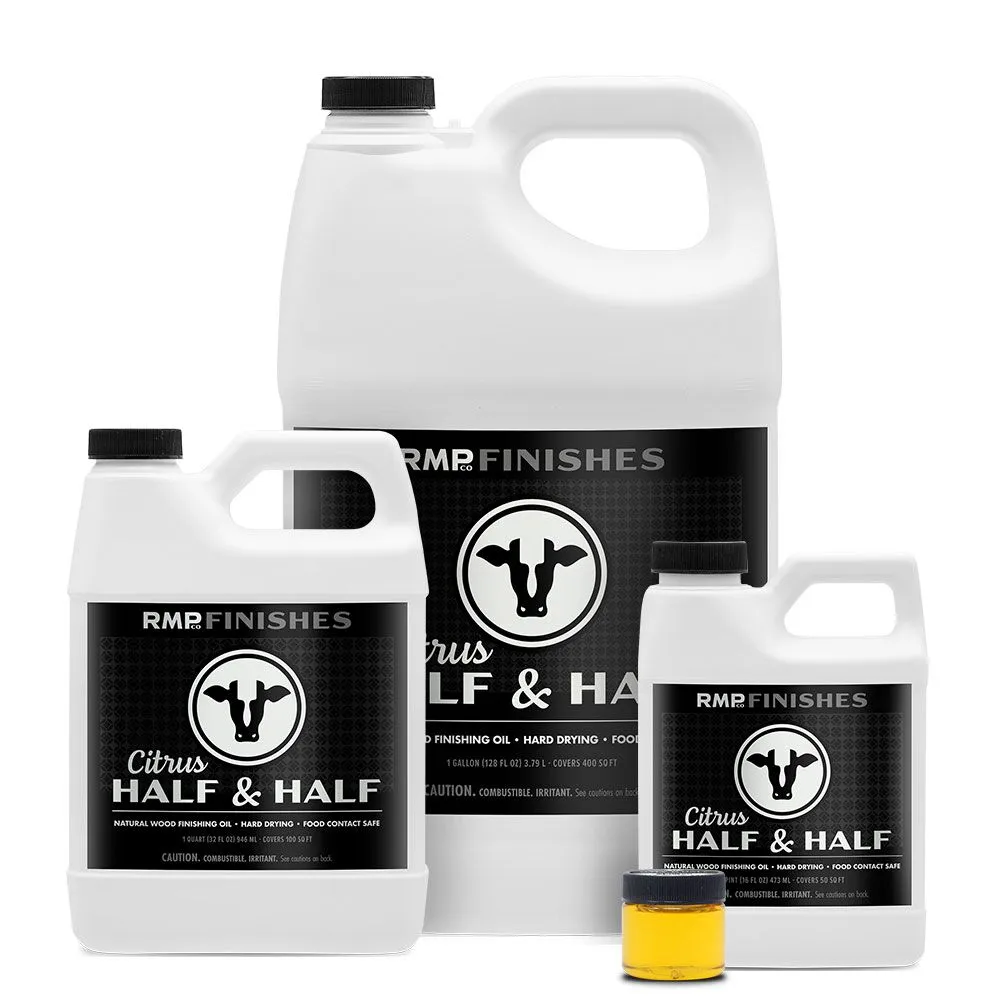
Drying oils such as tung oil or linseed oil are all-natural and food-safe oils that harden, creating a more durable finish than other natural oils or even wax. I recommend applying a drying oil after years of heavy use, if the wood appears extremely dry, or if you decide to sand out deep scratches and gouges. However, these finishes take a long time to dry, are flammable, and have a distinct odor, so I only suggest them to people who are comfortable with small DIY projects. If you go this route, make sure you use a food-safe brand without harmful solvents, and always follow the instructions on the bottle.
Order my preferred brand ➚
CHEAPEST & EASIEST CONDITIONERS
Food-safe Mineral Oil
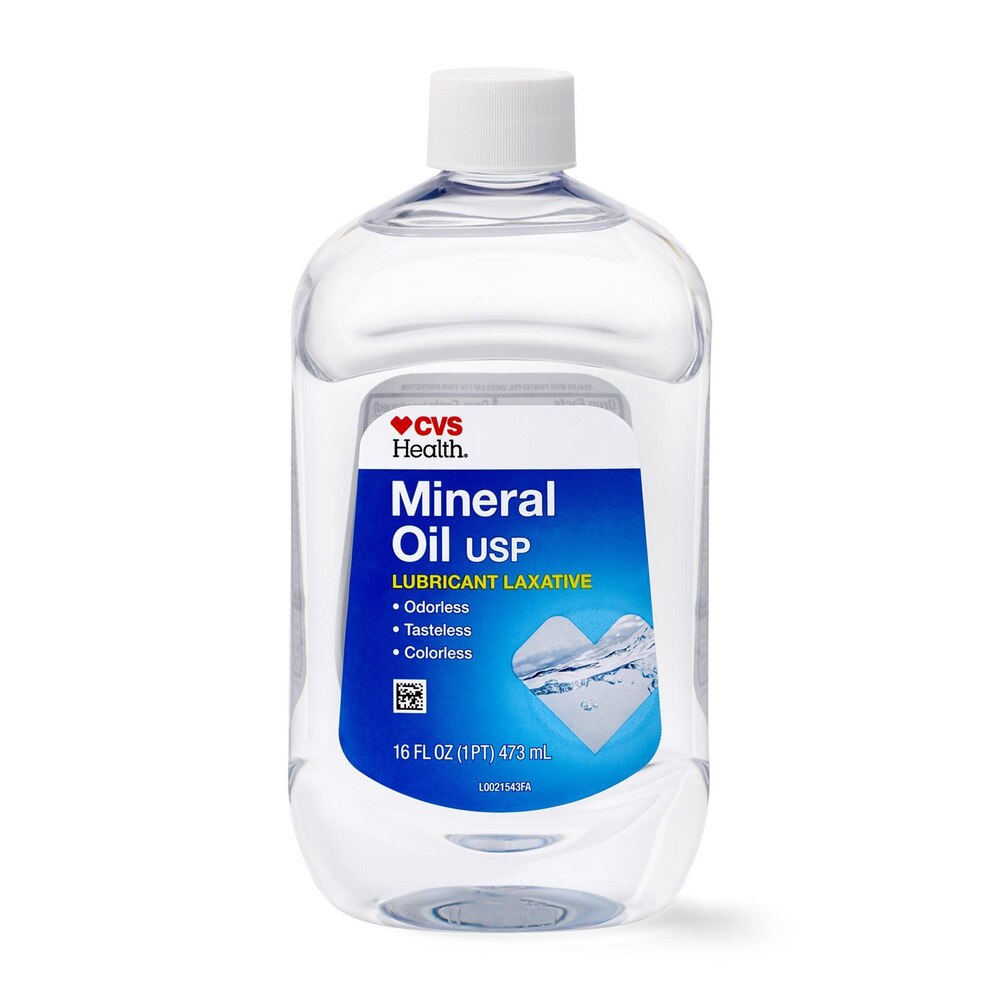
Food-safe mineral oil is the cheapest and easiest option for reconditioning oiled wood, but it is also the least durable, and will require more frequent applications. You can find it at your local pharmacy, kitchen supply store, or hardware store. Aplication is as simple as wiping it on and buffing it off. Don’t bother paying high prices for mineral oil branded as Cutting Board Oil: any food-safe mineral oil will do.
Purchase at your local pharmacy or hardware store ➚
WOOD CONDITIONING IN A PINCH
Household Kitchen Oils
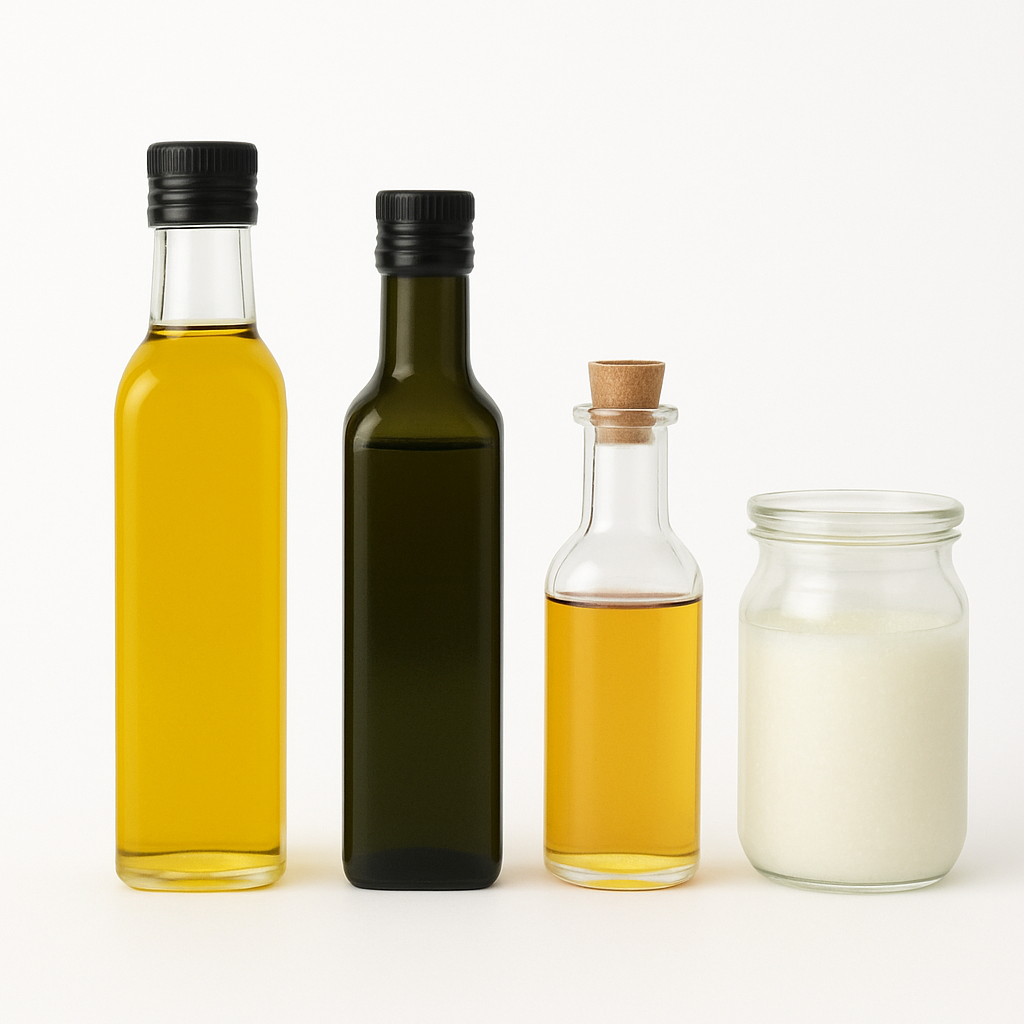
For items used regularly, many plant-based cooking oils found in your kitchen will be just as effective as mineral oil. Olive oil, walnut oil and coconut oil can all be used as a wood conditioner. However, some oils (like canola oil) will leave a sticky residue, and all of them will eventually go rancid. If the oil is fractionated (a steam distillation process) it will last longer, but it is still important to pay attention to the shelf life of the oil. Because of this, I only recommend these natural oils for items that will be used and washed regularly.
Questions?
Contact me with specific questions about the finishing process and care of wood!